JDATA
Politics • Education • News
Sweetwater Authority Faces $1.2 Million Decision on Water System Interconnections
14 hours ago


SWEETWATER – The Sweetwater Authority is debating a costly project to relocate two critical water interconnections with the City of San Diego. While staff emphasizes the project's importance for system reliability, particularly for the Bonita Highlands area, several board members have raised concerns about the $1.2 million price tag, questioning the necessity and timing of the expenditure.

The project is driven by the City of San Diego's plan to replace its own aging 36-inch pipeline with a new, larger 48-inch main along Sweetwater Road. This work requires the Sweetwater Authority to relocate its Willow Street and Verdagara Place interconnections, which tap into this main to provide emergency water supply. Under a proposed 20-year agreement, the Authority would be responsible for all costs associated with moving the connections.

During a recent meeting, Authority staff presented the project as essential for maintaining a resilient water system. The two connections serve as a vital backup for thousands of residents. The Verdagara interconnect, in particular, is described as the "only alternate feed" for the Bonita Highlands hydraulic zones, which serve over 1,000 homes and a population of more than 16,000 people. According to staff, a failure in the primary supply without this backup could cause water flows to drop to one-third of normal levels and risk contaminating the system.

However, the estimated $1.2 million cost, which some board members speculate could climb closer to $2 million, has prompted significant debate. Director Martinez voiced strong reservations, pointing to the Authority's already robust system, which includes multiple other interconnections, the Reynolds desalination plant, and local wells. "We have a lot of stuff, you know, we have a lot of redundancy," he stated, suggesting the significant expense warrants a deeper analysis. "I don't know if it would be wise to spend $50,000 to have a deep study on this item before we spend the $1.2 million or more."

General Manager Carlos Quintero acknowledged these concerns but stressed the unique vulnerability of the area in question. "This is a bit more of a fragile portion of our system where any minor hiccup... will result in [losing] the water," he explained. With the City of San Diego planning to bid its pipeline project within two months, the board faces a tight deadline.

The discussion highlights a classic challenge for utility providers: balancing the high cost of insuring against potential emergencies with the ongoing effort to keep water rates affordable. As the Authority weighs its options, which include approving the agreement or commissioning a new feasibility study, the decision will have long-term implications for both the security of the water supply and the financial burden on its ratepayers.


AI WROTE FROM AUDIO

EMAIL : [email protected]

@619CVLD

For ANY Corrections

community logo
Join the JDATA Community
To read more articles like this, sign up and join my community today
0
What else you may like…
Videos
Posts
Articles
November 04, 2023
LOCALs ONLY CONTENT.

WELCOME TO THE CLUB.

00:03:01
June 03, 2022
Diablo immortal
00:00:19
April 01, 2022
Comments open
00:01:08
February 20, 2025
OPERATION CLEAN SWEEP part 3
placeholder
January 01, 2025
placeholder
April 01, 2024

THANK YOU FOR YOUR SUPPORT

MORE IS COMING

SanDiegoLiveData.com

14 hours ago
Chula Vista Cracks Down on RVs and Other Code Violations


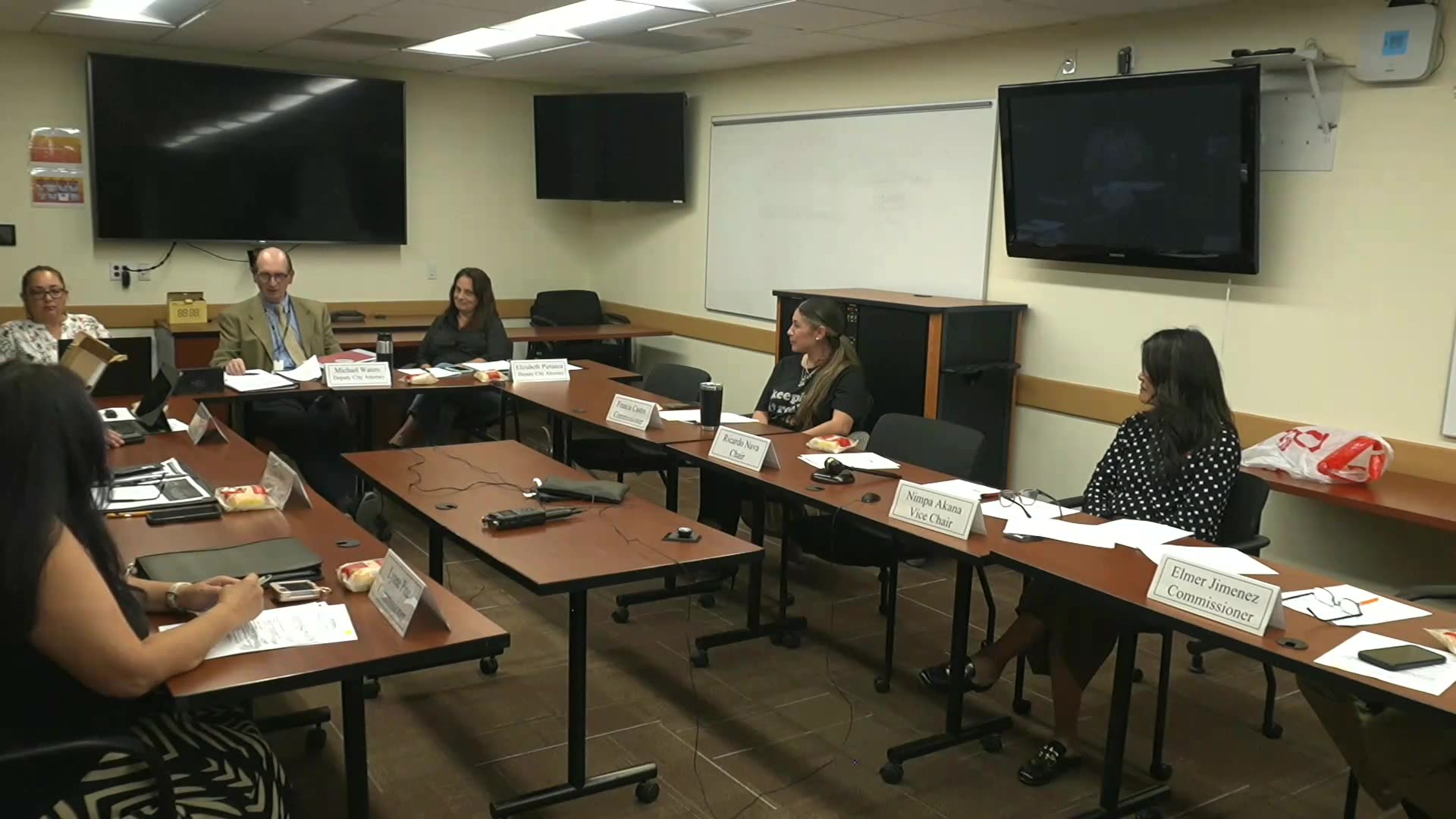
CHULA VISTA, CA – The city is intensifying its enforcement of municipal codes, with a particular focus on the illegal long-term parking of recreational vehicles (RVs) on residential properties, unpermitted land grading, and the use of storage containers. Recent public meetings have highlighted the delicate balance officials must strike between enforcing safety and environmental standards and addressing the practical challenges faced by residents amid a regional housing crisis.

A primary point of contention is the use of RVs as semi-permanent dwellings. While acknowledging the housing crunch, city code enforcement remains firm: using an RV as a primary residence on a residential lot is a violation due to safety concerns, such as fire risks from improper electrical hookups. The rules also target the proliferation of "makeshift RV parks" in residential backyards. Following heated debate, the Planning Commission recently adopted a rule limiting RV occupation on private property to seven consecutive days. "We are talking about backyards with three, four, or even six RVs in very poor condition, which poses real safety problems," one commissioner noted, explaining the goal is to give code enforcement the tools to act on complaints about abusive situations.

Another major issue discussed is unpermitted land grading. Officials clarified that while fines for building code infractions range from $100 to $500, penalties for grading violations can reach up to $25,000 per day. Deputy Director for Development Services, Rebecca Bridgeford, explained the high fines are a tool to compel immediate action on large-scale violations with significant environmental impact. "If you're talking about 250,000 cubic yards, you're talking about 7,000 school buses full of dirt," she stated. However, she assured that for property owners who cooperate to get the proper permits, these large fines are typically "washed away."

The city is also grappling with the growing use of shipping containers and other portable storage units in residential areas outside of active construction projects, which some view as a visual nuisance. At the same time, officials debated fees for nonprofits, with some arguing for a more collaborative approach to avoid hindering the work of community-based organizations like the South Bay Pioneers, a sober living facility provider.

As Chula Vista continues to grow, these discussions underscore the city's ongoing challenge: how to update its regulations to address modern problems while remaining flexible to the needs of its residents. The recent decisions signal a move toward stricter enforcement, but the dialogue between the city and its community remains crucial in navigating the line between regulation and reality.

Read full Article
14 hours ago
Port of San Diego Overhauls Service Agreements Amid Heated Debate


SAN DIEGO – The Port of San Diego is navigating a series of contentious debates over the financial agreements that reimburse its five member cities for public services. Commissioners are calling for a standardized, transparent methodology, as recent discussions over contracts with Imperial Beach have revealed "wildly different" and inconsistent formulas for calculating costs for police and fire protection on Port Tidelands.

During a review of the Municipal Services Agreement (MSA) with Imperial Beach, commissioners voiced frustration over the lack of a unified standard. Each city—San Diego, National City, Chula Vista, Coronado, and Imperial Beach—currently uses a unique formula, making it difficult for the Port to verify costs and ensure fair reimbursement. Some cities are paid based on calls for service, while others include "proactive policing" or use complex "backup models" to justify higher costs.

The core of the debate with Imperial Beach centers on a unique clause that includes a three-block inland zone in the service area. This practice is based on the theory that many public safety incidents in this area are a "spillover" from activity originating on the Port-managed beaches. This has raised legal questions, as the Port is essentially paying for services on land it does not control. Port counsel justified the practice by arguing a direct "nexus" exists, as the need for services "arises due to the tidelands." However, some commissioners warned this could set a costly precedent if other cities demanded similar terms. "If this were applied to other cities, get ready for a significant budget challenge at the port," one commissioner noted.

While acknowledging the unique needs of each city, several commissioners stressed the need for reform. "We're here attempting to make a fair reimbursement... It's our duty to ensure that we're paying a fair price," stated one board member.

The push for consistency comes as the Port also moves to streamline development on another front. It recently approved updates to the Chula Vista Bayfront Master Plan to simplify construction phases by aligning transportation mitigation measures with the actual pace of development, a move aimed at accelerating the project.

These financial and logistical adjustments highlight the complex partnerships between the Port and its member cities. As the Port seeks a more equitable and efficient system for managing its responsibilities, the challenge will be to create a clear framework that serves the public interest without creating unintended financial burdens.


AI WROTE FROM AUDIO

EMAIL : [email protected]

@619CVLD

For ANY Corrections

Read full Article
15 hours ago
Hector Martinez Elected President of South Bay Water Amidst Rising Rate Concerns

SOUTH BAY — During its first meeting of the year on January 24, the South Bay Water Board of Directors elected its new officers for 2026. Director Hector Martinez was unanimously voted in as the new president, with Director Cox appointed as vice president. The election took place amid growing concerns over potential water rate hikes from the San Diego County Water Authority, a topic that dominated the board's discussions.

The meeting, held in a hybrid format allowing for both in-person and virtual participation, saw the unanimous election of the new leadership team. Hector Martinez will take the helm as president, succeeding the outgoing president, Director Castañeda. Director Cox will serve as vice president, and Director Martinez-Perez was reappointed as deputy treasurer. The new officers will officially assume their roles at the next board meeting.

Beyond the election, a significant portion of the discussion focused on the financial pressures stemming from the relationship with the San Diego County Water Authority. Director Castañeda reported on a previous caucus meeting, highlighting the "exponential increases in rates" that customers could face. The core issue is the County Water Authority's declining water sales projections, coupled with a lack of success in selling its excess water supply.

To compensate for the revenue shortfall, the Authority may be forced to shift more costs onto fixed rates, penalizing agencies like South Bay Water that have invested in their own sustainable water sources and purchase less water. "Unfortunately, for organizations like Sweetwater, who don't buy a lot of water from the County Water Authority, they may force a higher percentage into the fixed rate rubric, which basically would increase our costs, whether we use water or not," explained Director Castañeda.

This potential financial penalty for water independence sparked a sense of urgency among the board members. The discussion pointed to a potential "revolution in the making" as more local agencies develop their own water purification systems and become less reliant on the County Water Authority. The board expressed a firm stance against being punished for its reliability and proactive measures.

The situation is further complicated by the broader water crisis affecting the Colorado River, where shrinking reservoir levels are forcing difficult decisions about water allocation among states. As South Bay Water continues to pursue environmentally responsible solutions that reduce reliance on these strained resources, the board finds itself navigating a complex political and financial landscape where its self-sufficiency could paradoxically lead to higher costs for its customers. The board plans to engage with the County Water Authority and state-level officials to advocate for a fair outcome that does not penalize responsible water management.


AI WROTE FROM AUDIO

EMAIL : [email protected]

@619CVLD

For ANY Corrections

Read full Article
See More
Available on mobile and TV devices
google store google store app store app store
google store google store app tv store app tv store amazon store amazon store roku store roku store
Powered by Locals