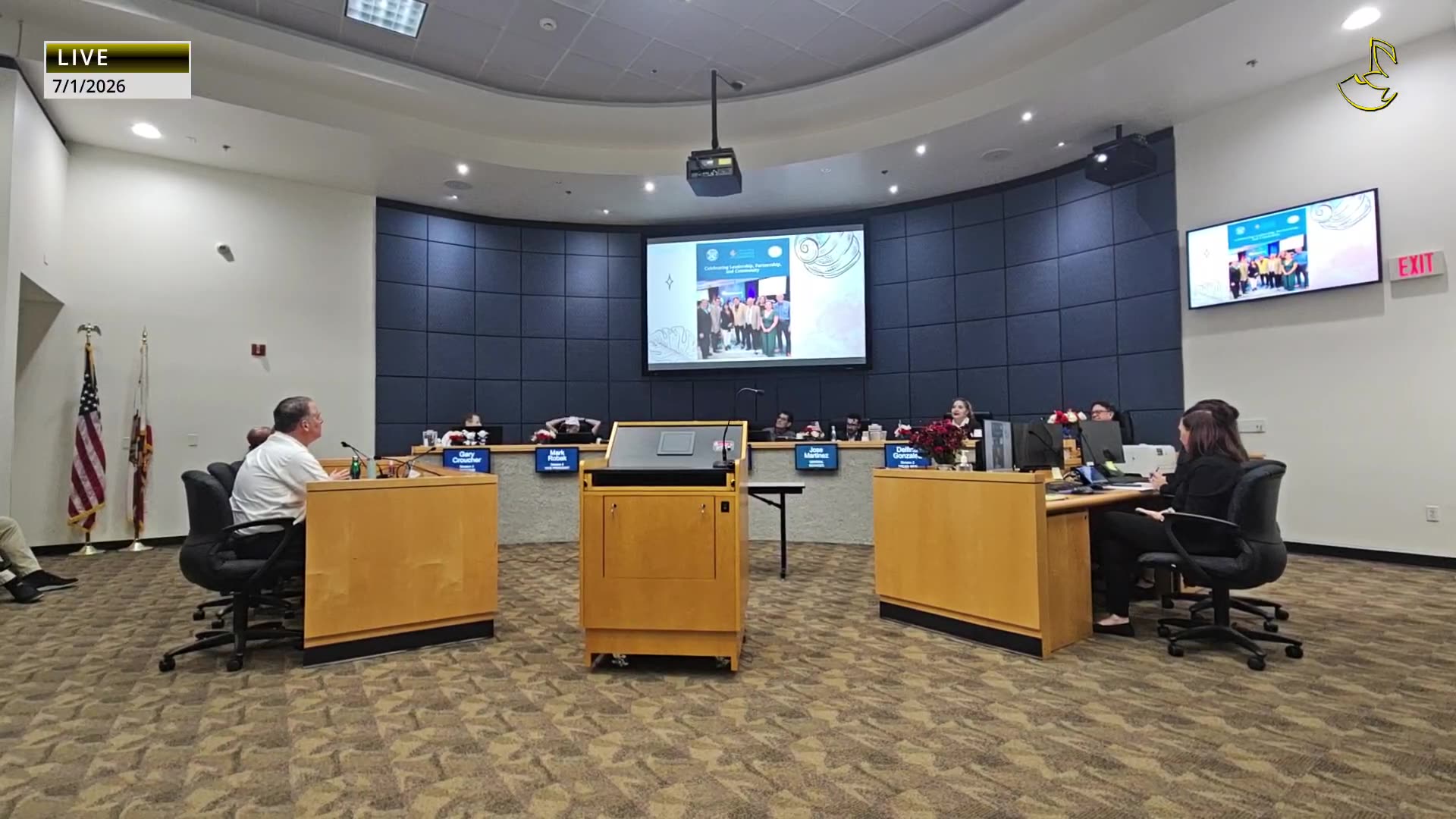
**SAN DIEGO** – The San Diego County Water Authority is charting a new course for the region's water security with its draft 2025 Urban Water Management Plan (UWMP). Presented to the Water Planning and Environmental Committee on March 19, 2026, the comprehensive plan signals a major shift in demand forecasting while outlining strategies to ensure supply reliability for the next 25 years.
The draft plan, a state-mandated report updated every five years, is the culmination of a two-year collaborative effort with the authority's 24 member agencies. For the first time, projections reflect a significant "decoupling of population growth from demand," acknowledging decades of successful conservation by residents and businesses. This updated forecast provides a more realistic foundation for managing the region's water portfolio.
During the public comment period, Courtney Brown, a staff attorney with San Diego Coastkeeper, commended the revised demand projections. However, she also voiced concerns about the plan's long-term supply assumptions, particularly regarding the Colorado River. "A legal right to divert water doesn't conjure water that isn't physically there," Brown stated, highlighting the current low levels of Lake Mead and Lake Powell and the upcoming expiration of the IID water transfer agreement in 2047. She urged the board to ensure these "plausible worst-case outcomes" are quantitatively factored into the final plan.
Water Authority staff, including Water Resources Manager Jeremy Crutchfield, detailed the plan's supply and demand scenarios. A key takeaway is the near-perfect alignment between the authority's revised regional demand forecast and the aggregated forecasts from its member agencies. Crutchfield also introduced the concept of "regional supply flexibility," a planning tool that accounts for variables like the potential to execute water exchange agreements, turn down the Carlsbad Desalination Plant, or adjust for delays in new local supply projects. This provides a dynamic model for managing surplus and ensuring stability.
The meeting also included an update on the Water Shortage Contingency Plan (WSCP). This standalone drought-response guide has been revised to offer greater flexibility, moving away from rigid mandatory water-use reduction levels. The new approach allows for drought response actions to be tailored to local conditions rather than broad statewide mandates, a crucial lesson learned from the 2021-2023 drought when the region had sufficient local supplies despite state-level emergency declarations.
The draft UWMP and WSCP are now in a public review period, with a public hearing scheduled for April before a final board adoption in May. As the region navigates a future marked by climatic uncertainty and evolving supply dynamics, this plan represents a critical roadmap. Its success will depend not just on the accuracy of its forecasts, but on its ability to adapt to the very uncertainties it seeks to manage, ensuring a reliable water future for all San Diegans.