JDATA
Politics • Education • News
Chula Vista City Council Adopts New Rules for Public Meetings, Explores Off-Site Engagement
DRAFT1
April 17, 2026


CHULA VISTA, CA – The Chula Vista City Council is modernizing how residents engage with their local government. During its meeting on April 14, 2026, the council unanimously adopted new policies to allow remote public participation and ensure meetings continue during technical disruptions, with these changes set to take effect by July 1, 2026.

In response to new state laws, the city is updating its protocols to enhance public access and engagement. The new rules require the city to provide options for residents to attend and offer public comment remotely, either by phone or an online platform. This change aims to broaden participation, making it easier for those unable to attend in-person meetings at city facilities to have their voices heard. Remote speakers will be granted the same amount of speaking time as those present in the council chambers.

"The law is intended to encourage broader participation, particularly among underrepresented and non-English-speaking communities," stated a city representative. In line with this goal, the city will also be required to translate key documents, including its public access webpage and all city council meeting agendas, into Spanish. This formalizes and expands a practice the city began in 2021. To ensure residents are aware of these new options, the city plans a targeted outreach campaign using its newsletter and local media organizations.

The new legislation also introduces strict protocols for handling disruptions. If a remote call-in system fails, the council must pause the meeting until the service is restored. Procedures for handling disruptive behavior will now apply equally to both in-person and remote participants, with a warning required before removal.

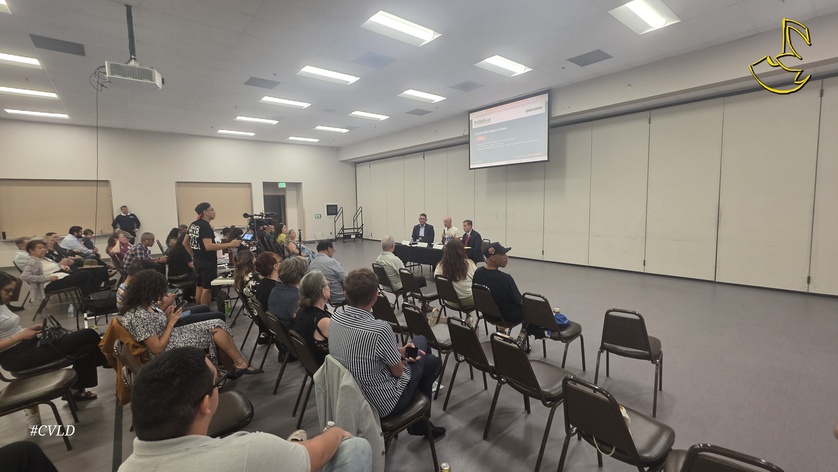
Following the adoption of these measures, the council also addressed the need for clear rules governing public meetings organized by council members at non-city venues. A councilmember raised the question of how city resources can be used for events like "state of the district" addresses held in community spaces. "What I'm looking for is what are the bounds when we have public meetings that are not in city facilities?" the councilmember asked. In response, the council agreed to have the City Manager and City Attorney's offices prepare a report clarifying the guidelines for such events.

As Chula Vista continues to grow, these initiatives reflect the city council's proactive approach to enhancing governance and transparency. By removing barriers to participation and clarifying rules for community outreach, the city is taking significant steps toward fostering a more inclusive and accessible democratic process for all its residents.


community logo
Join the JDATA Community
To read more articles like this, sign up and join my community today
0
What else you may like…
Videos
Posts
Articles
November 04, 2023
LOCALs ONLY CONTENT.

WELCOME TO THE CLUB.

00:03:01
June 03, 2022
Diablo immortal
00:00:19
April 01, 2022
Comments open
00:01:08
March 14, 2026
The Financial Beat: Chula Vista’s Q2 Money Update

The March 17 City Council meeting provided a deep dive into the City's financial health, uncovering both revenue challenges and strategic investments. Here is a breakdown of how your tax dollars are being managed and where the money is going as of the Second Quarter of Fiscal Year 2025-26.

1. The General Fund: A $3.9 Million Revenue Shortfall

Total General Fund revenues are projected to be $3.9 million lower than the Amended Budget. While the City is still seeing 6.6% growth in property tax over last year, several key sectors are underperforming against expectations:

Property Tax: Projected to be $3.1 million below budget. This is due to a cooling housing market, a decline in home sales, and the timing of assessments for the new Gaylord Pacific Resort.

Transient Occupancy Tax (TOT): Projected to be $3.4 million lower than budgeted. Shortfalls in Bayfront receipts and a delay in the opening of two other new hotels significantly impacted this category.

Offsetting Gains: Stronger-than-expected Franchise Fees (up $0.6M) and other ...

February 24, 2026

draft OnE IS TO COMPETE WITH CVPD AI..

February 24, 2026
Clean Audits, Community Learning, and Calls for Safety: Southwestern College Board Meeting Highlights

draft 1
Southwestern College’s Governing Board met in Chula Vista on February 23, 2026, delivering a clean financial bill of health while hearing urgent appeals from students on campus safety and immigration concerns. The packed session, accessible via Zoom, showcased the district’s expanding Continuing Education programs and affirmed a year‑round commitment to Black History.
In audited finances, external auditor Rachel Green of Eide Bailly reported three unmodified opinions—financial statements, federal awards, and state compliance—alongside clean financial and performance audits for Proposition Z. “Three unmodified opinions means three clean bills of health,” she said, noting no audit adjustments were required and that 83% of Prop Z expenditures tested were used for authorized projects.
The board spotlighted Continuing Education’s growth through noncredit classes, community education, contract training, and the modernized YES Academy. Programs are designed to “meet ...

April 20, 2026
post photo preview
Break the Silence: Chula Vista Rallies to Support Survivors and Strengthen Community
DRAFT1

On April 19, 2026, Monte Vista Park and Recreation Center in eastern Chula Vista hosted “Break the Silence,” a family-friendly rally and resource fair aimed at raising awareness about child abuse and trafficking, supporting survivors, and mobilizing residents. Organized by Team Only Stronger with partners and local streamers, the event ran from 11:00 a.m. to 4:00 p.m., blending testimony, services, and activities to turn concern into action.

Survivors, families, advocates, service providers, and local vendors convened for outreach, solidarity, and practical support. Chula Vista Live Data livestreamed the day to widen access and accountability. “We’re just coming as a collective to also build community,” one organizer said, while Robert urged viewers, “If you’re not down here in Chula Vista today, come on down… bring unity within the community.”

The gathering unfolded across shaded areas and courts at Monte Vista Park and Recreation Center on April 19, 2026, with a speaker program around midday and live music planned later in the afternoon.

Organizers and speakers called for ending the culture of silence that protects predators and isolates victims, underscoring risks to minors, gaps in long-term services, and the need for trauma‑informed responses. “We have to talk about these things that make us uncomfortable,” said Autumn, a host and advocate. Survivor testimony highlighted online grooming and coercion, urging vigilance near schools and on social media.

The event paired advocacy with accessibility—youth basketball, jump houses, arts-and-crafts, free haircuts, shaved ice, and tacos—while directing families to resources including YMCA Child Resource Services, Palomar Trauma Recovery Center, One Safe Place, and Empowerment Ministry. Vendors helped fund youth teams and community projects, and sign-ups opened for neighborhood watchdog groups and humanitarian initiatives.

The initiative’s media backbone was citizen streaming: San Diego Live Data aggregated live coverage of community issues and public meetings to increase transparency and encourage participation. As cameras panned from booths to the stage, volunteers emphasized concrete steps any resident can take—share, support, show up.

Read full Article
April 17, 2026
Canceled Ethics Meeting Spurs Transparency Push as Chula Vista Library Trustees Review Budget
DRAFT1


Lead: On April 15, 2026, at the Civic/City Centre Library, Chula Vista’s Board of Library Trustees combined a budget review with a call for clearer public notifications after a Board of Ethics meeting was canceled without an obvious calendar update.

A local resident, Robert, used public comment to urge the city to standardize cancellation notices across boards and commissions, warning that hidden updates mislead subscribers and automated calendars. “We want to make sure the cancellation is publicly visible to everybody,” he said. Praising the library for its postings, he pressed for consistency citywide and for meeting minutes to capture brief rationales alongside votes: “It’s a good position for you guys to all be on the same level of information to make a good policy recommendation.”

Trustees then heard a detailed review of the proposed 2025–2026 legislative budget. Staff outlined a people-centered plan: approximately $4.3 million for personnel (about 80% of costs), $148,900 for materials, and operations and facilities spending across Civic, South, and Otay Ranch. The system reported around 250,000 visits, 438,000 items circulated, and 830 programs with 18,000 attendees last year, operating seven days a week with roughly 75 employees and significant support from the Friends of the Library, whose book sales can reach $20,000–$30,000 annually at Civic.

Comparisons with Oceanside, Escondido, and Poway highlighted a materials funding gap for a city of about 278,000 residents. Grants continue to bolster services, including literacy (around $16,000 annually), Lunch at the Library, the Memory Lab, and State Library “Empowering Access” equipment such as sewing machines and light tables. Partnerships with the school district fund STEM and music programs; the food pantry now serves roughly 500 families per month.

Trustees discussed advocacy timing, voting to designate a representative to speak at the city budget meeting on April 15 at 6:00 p.m., with additional sessions on April 22 at Hillside Ranch Library (5:30 p.m.) and a forthcoming date at Nova Park. Staff underscored that early and repeated input—letters to Council and workshop comments—can influence adjustments. Meetings will be streamed via ChulaVistaLiveData.com.

Context: Municipal initiative—public library budget review and transparency discussion.

As Chula Vista prepares a 60,000-square-foot Otay Ranch library and renovations at Civic and South, the stakes are clear: timely notices and robust materials funding are small levers with big impact. The question now is whether the city—and its residents—will align process and investment to match a growing community’s needs.

Read full Article
April 14, 2026
post photo preview
Chula Vista Police Department Navigates Major Upgrades, Staffing Shifts, and Public Scrutiny
DRAFT1


**CHULA VISTA, CA – The Chula Vista Police Department is in the midst of a significant transformation, simultaneously undertaking a multimillion-dollar facility overhaul, major leadership changes, and new equipment rollouts, all while facing public scrutiny over transparency and planning for future expansion. These updates were detailed across several community meetings held on April 2, 2026.**

The department is grappling with extensive infrastructure challenges at its headquarters, which is undergoing a massive HVAC system renovation. The project, already two months in, has caused significant disruption, with street closures for cranes and internal relocations. Staff have endured unpredictable temperatures, but officials are optimistic the new climate control system will be operational by summer. Compounding the logistical issues is a severe parking shortage, with 35 to 40 spaces occupied by vehicles held as evidence. “It’s very upsetting to staff to come in and park at the police station, but they’re parking next to a car that’s full of blood that you’ve known people have died in,” a spokesperson explained. The city is finalizing plans for a secure warehouse to store these vehicles.

In a major leadership shuffle, Acting Assistant Chief “Dan” Peak has assumed the duties of assistant chief. This has triggered a cascade of promotions, with Lamar Barrett and Ernie Pinedo appointed as Acting Captains. The department also announced the acquisition of new Glock handguns for all officers, equipped with laser sights and flashlights, to enhance safety and accuracy. This move aligns Chula Vista’s equipment with that of the Sheriff’s Department.

Planning for the city’s future is also a key priority. To address the “massive growth” in the eastern part of the city and its impact on police response times, the department is moving forward with plans for a new substation. The location and strategy for this facility will be entirely data-driven. Concurrently, the department is exploring a community camera program, which would allow voluntary access to private security feeds during emergencies, though officials stress the need for extensive public outreach and privacy considerations before any implementation.

However, these initiatives have not been without controversy. A local activist has accused the city and police of procedural failures and a lack of transparency regarding a state-mandated community meeting on police equipment held on April 2, alleging that the venue was not properly noticed to the public, a potentially violation. This incident highlights the persistent tension between law enforcement’s operational needs and the public’s right to participation and oversight. As the department modernizes its infrastructure and adapts to a growing city, balancing these complex internal changes with external demands for transparency remains a critical challenge.


Police and Public Face Off Over Transparency and Military-Grade Gear in Chula Vista

CHULA VISTA, CA – A community meeting on April 2, 2026, intended to provide transparency on the Chula Vista Police Department’s (CVPD) use of military-style equipment, instead became a tense forum where residents voiced frustrations over public outreach, accessibility, and departmental policies.

The meeting, one of several legally required by Assembly Bill 481, saw Acting Police Chief Dan Peake and SWAT Commander Lieutenant Joel Monreal present the department’s annual report. They detailed an inventory that includes 46 drones, an armored rescue vehicle, and less-lethal tools like pepperball launchers, none of which were sourced from the federal 1033 surplus program. In 2025, drones were deployed nearly 3,000 times, and the Lenco BearCat armored vehicle was used 17 times. Officials reported zero policy violations.

However, the dialogue quickly shifted from the report itself to the nature of the meeting. Residents criticized the late public notice, the 2:00 PM timing, and the choice of venue—the police headquarters—as barriers to genuine public participation. “This is not community engagement,” one long-time activist stated. “Even to walk through the doors, it’s intimidating. None of my friends would come today... We need to have it in the community.”

Attendees also scrutinized the department’s policies, questioning why state laws restricting the use of projectiles like pepper balls in crowd control situations were not explicitly written into the CVPD’s use-of-force policy. Further questions were raised about discrepancies in the reported number of rifles from the previous year.


The Acting Chief of Police acknowledged the community’s concerns, promising to review outreach methods and policy language. “We are one team. We are one community,” he affirmed. “And so if there’s a better way to present the information... if there’s a better way to be more accessible to all segments of our community, we’ll do that.”

With the City Council scheduled to vote on the policy on April 21, and a final community meeting set for April 29, the recent discussions highlight a significant gap between procedural compliance and the community’s demand for true accountability. The outcome will show whether this dialogue can pave the way for a more collaborative future in public safety or if resident concerns will remain unresolved.

Read full Article
See More
Available on mobile and TV devices
google store google store app store app store
google store google store app tv store app tv store amazon store amazon store roku store roku store
Powered by Locals