JDATA
Politics • Education • News
McCann and Tamayo Clash Over Bayfront Dollars, Affordable Homes and Homelessness at Politifest South County
Mayor John McCann and challenger Francisco Tamayo traded sharp blows over the Bayfront, who can afford a home, and whether the city's homelessness strategy is working.
October 03, 2026
post photo preview

Independent coverage by Chula Vista Live Data / jdata17. Hosted by Voice of San Diego (Politifest South County); not affiliated with VOSD or the candidates. Quotes are from our recording of the event. Candidate figures are their own claims; the Fact Check shows what we could and couldn't confirm from public sources.

By Robert Johnson | jdata17

Oct. 2, 2026 · National City, Calif.

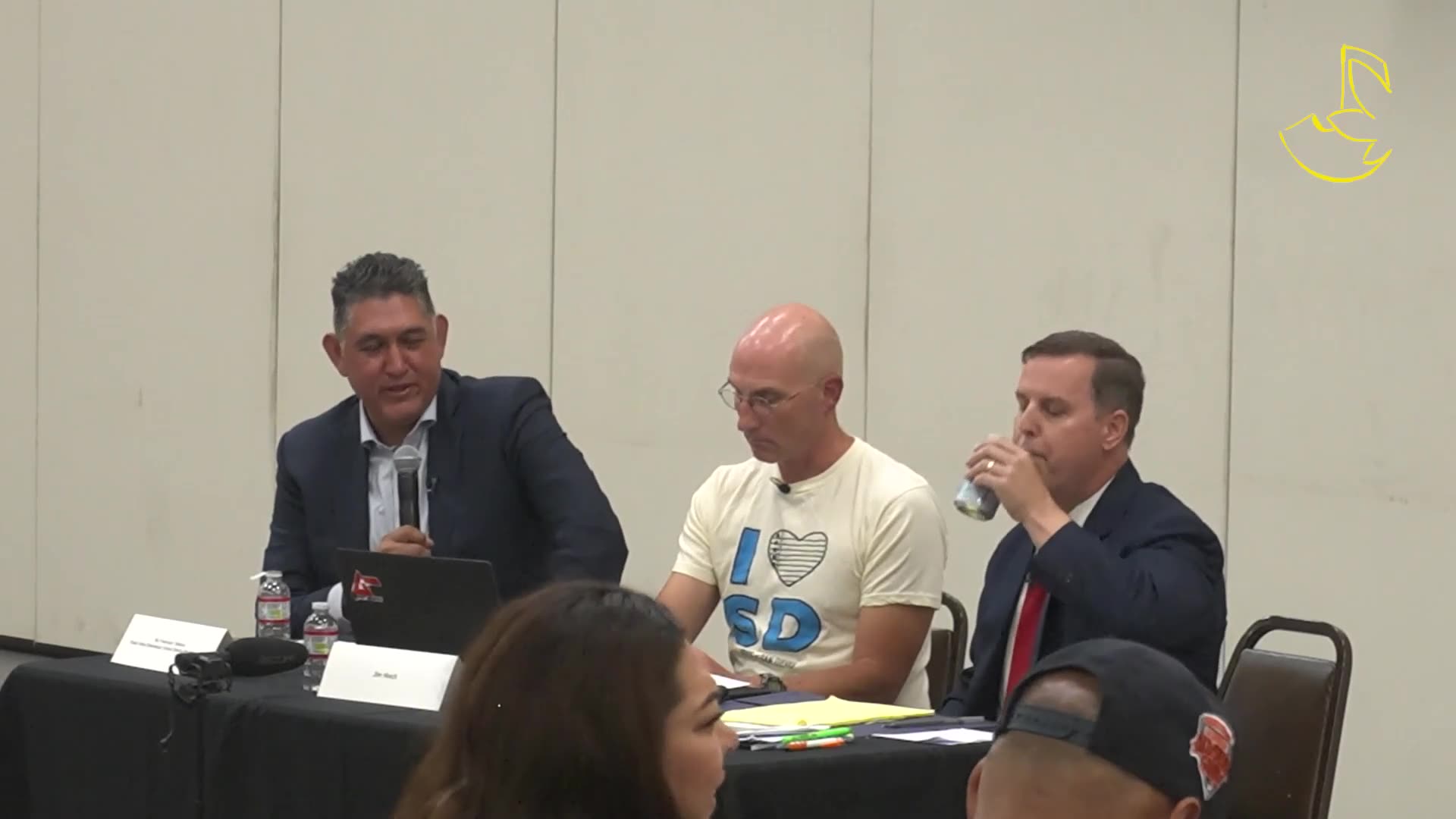
Chula Vista Mayor John McCann and challenger Francisco Tamayo met face to face Friday night at Politifest South County, offering sharply different pictures of the same city. McCann described a fiscally disciplined “economic engine.” Tamayo described a city where working families can’t afford a home and visitor dollars drive right past it.

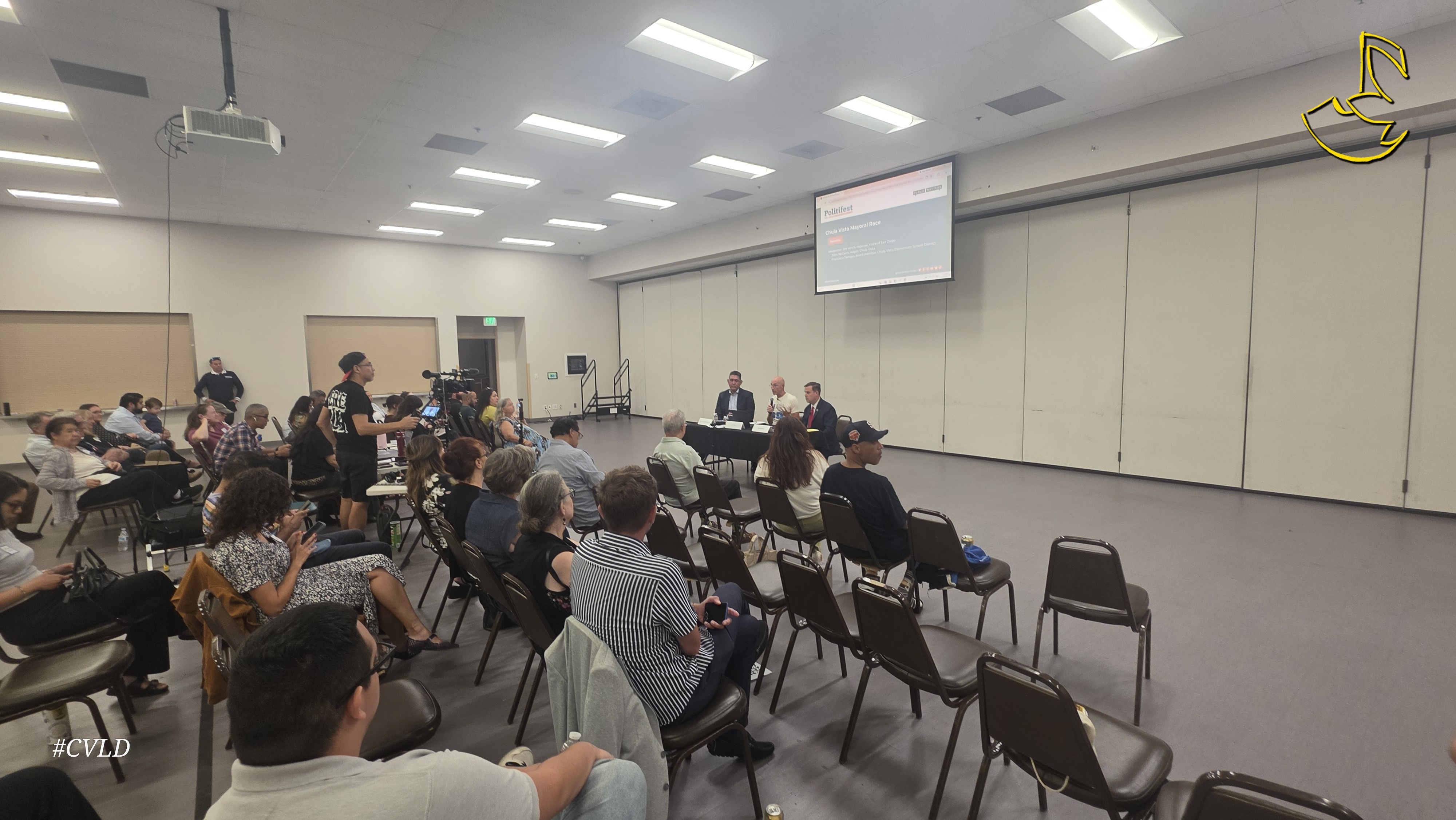
The forum, hosted by Voice of San Diego at the Martin Luther King Jr. Community Center in National City, opened with the National City mayoral race and closed with the Chula Vista contest. VOSD South County reporter Jim Hinch moderated. Each candidate had about five minutes per question, followed by moderated back-and-forth and audience questions submitted through an app. McCann is the incumbent Republican. Tamayo, a Democrat, is a trustee on the Chula Vista Elementary School District board.

Budget and the Bayfront

Asked how they would keep the city on solid footing in an uncertain economy, McCann, who called himself “a finance guy,” said the city built a 15% reserve over years and refinanced its unfunded pension liabilities with pension obligation bonds at low interest rates, which he said “saves our budget about 14 million dollars a year.” This year’s budget, he said, came with “no cuts in services,” no layoffs, no new taxes and “definitely no parking fee increases.”

“We have laid a foundation of strong financial stability,” McCann said. He called the Gaylord Pacific Resort, the anchor of the Bayfront Master Plan, “Chula Vista’s overnight success story for 22 years.” He described it as a $1.3 billion project that produced more than 3,000 construction jobs and 1,500 to 2,000 permanent jobs. He pledged to put “a portion of that revenue” into sidewalks and roads in older neighborhoods, and highlighted a planned 100-acre High Tech Innovation Center meant to keep some of the roughly 80,000 to 90,000 residents who he said commute out of the city each day. He also cited a Southwestern College study that identified nursing as the region’s top in-demand job, which led to an agreement with San Diego State to offer nursing classes at the new Millenia Library.

Tamayo countered that the city “had to take money out of reserves” to balance this year’s budget, calling it “a signal that shows that the economy is not doing great.” He said the Bayfront was missing a business and entertainment district: “Those hotel rooms cost five hundred dollars a night.” He claimed the project would take “12 years to even break even” and warned of deficit spending and layoffs down the road unless the city adds an entertainment district and revives Third Avenue, which he said “is dying.” Visitors to the Gaylord, he said, go to downtown San Diego to eat and be entertained. “So we’re losing money right there,” he said.

McCann called the layoff prediction “ridiculous.” He said the Bayfront has three times as many hiking and walking trails as before, a new Sweetwater Park he called the largest park in the Port District, and weekly key passes for residents to the resort’s water park. He said the Gaylord Pacific is “number three out of that six thousand” Marriott properties worldwide in revenue generation. He then went after Tamayo’s school board record, claiming the district faced a $40 million deficit that one-time state money reduced to $16 million, and that Tamayo voted to lay off teachers and classified staff and to reduce school resource officers.

Tamayo answered that the district’s cuts reflect falling enrollment. “That’s because people are leaving, John,” he said. McCann said the city is growing and that school officers are funded under a cost-sharing agreement, with the city paying half.

Housing Affordability

Asked how they would make housing affordable for lower- and middle-income residents, McCann pointed to what he called the “missing middle” and said he pushed developers toward ownership instead of apartments. That produced Sunbow II, a Lennar project near Interstate 805 and Olympic Parkway with 718 entry-level homes on land once zoned industrial, and Citrus Bay, a CalWest project with 244 townhomes on the former Sears site, which he called “the biggest new housing project in Chula Vista in over three decades.”

Tamayo questioned what counts as affordable. “A $600,000, a $700,000 home for an entry level is not affordable,” he said, adding that buyers would need about $150,000 in income at 7% interest rates. He promoted his Chula Vista Heroes Plan, which would use city-owned land, work with developers, add state and county grants, and use preapproved floor plans to sell homes below $500,000. It would also seek a special long-term interest rate from banks instead of an introductory rate, and it targets teachers, police officers, firefighters, nurses, and workers at places like Walmart and McDonald’s. “We’re becoming a renter community,” Tamayo warned. “We need 10,000 homes in Chula Vista now, not tomorrow.”

McCann replied that “the issue right now is supply and demand.” He said he has helped approve more than 30,000 new homes and that local prices remain more than $100,000 below the county average. He proposed using artificial intelligence to catch errors in permit applications before they are submitted, and cited a Point Loma Nazarene University study that found “forty percent” of the cost of new housing “was government.” He said a school district subcommittee Tamayo sits on had produced “zero” teacher homes.

After Hinch asked the crowd to hold its applause and boos, Tamayo pressed again: “I’m yet to hear how much is affordable.” He dismissed the AI proposal as more of the same, telling McCann, “ChatGPT didn’t start yesterday, John,” and said average rent for a two- or three-bedroom home in Chula Vista is “north of three thousand dollars.”

Homelessness

Hinch noted that police and fire officials told him homelessness-related incidents have become one of their top sources of calls. McCann described a Homeless Outreach Team that pairs police with social workers and nonprofits. He also described a bridge shelter of 65 pallet homes with wraparound services and a high-barrier entry rule: “you’ve got to be clean.” He added that the city has one of the county’s strictest encampment bans, and claimed homelessness fell 25% this year.

Moderator Jim Hinch responded from the stage: “And as a journalist, I can confirm that that figure is inaccurate.” He then turned to Tamayo. (The Fact Check below looks at what the public data shows.)

Tamayo called the shelter “a good project” but said it is “half baked” because it lacks a path to jobs. He proposed job-training partnerships with Southwestern College and leveraging county funding for long-term support. He said unsheltered people have spread into eastern neighborhoods, including Otay Ranch, where he lives. McCann responded that “a hundred people” have graduated from the Otay bridge shelter into permanent housing, and that many have jobs.

Affordability, the Latino Community and Public Safety

In audience questions, both candidates named affordability as the city’s biggest challenge. McCann said he opposes mileage, gas, new sales and new real estate taxes. Tamayo said residents spend “forty, almost fifty percent” of their income on housing and called for incentives to bring high-paying jobs, saying the city should “not just be a sleeper city.”

Asked how they would support the Latino community during increased immigration enforcement, McCann cited four years of the city’s El Grito celebration, which he said draws thousands, a 21-flag raising for Hispanic Heritage Month, and FBI data he said ranks Chula Vista among the 10 safest U.S. cities with more than 200,000 residents. When McCann turned to a newly signed state bill he tied to fighting human trafficking, Tamayo asked, “Are you saying that Latino community has human trafficking?”

Tamayo, noting that about 67% of the city is Latino, said that even as a U.S. citizen, “I still carry my passport because I feel fearful because of the color of my skin.” He proposed using the city’s existing app to alert residents to ICE activity in their neighborhoods. “We can’t stop it. We can’t prevent it,” he said, but the city’s job is to make sure residents “have the information they need.”

What’s Next

The choice before voters is a clear one. McCann is running on his record on reserves, the Bayfront and housing approvals. Tamayo argues those gains haven’t reached families struggling with rent and home prices.

Fact Check

We checked the candidates’ main factual claims against public records and news reports. Verdicts: Accurate, Mostly accurate, Needs context, Unsupported or Could not verify. The numbers at the end of each item refer to the Sources list below.

Featured: McCann’s claim that homelessness fell 25%

The claim. McCann said the number of homeless people in Chula Vista “went down by twenty five percent” this year, “one of the highest decreases in homelessness in the entire county.” Sources: 3.

What happened on stage. Right after McCann’s answer, moderator Jim Hinch said, “And as a journalist, I can confirm that that figure is inaccurate.” He didn’t say which number he meant before turning to Tamayo. Sources: 3.

What the count shows. The Regional Task Force on Homelessness’s January 2026 Point-in-Time Count found 355 people living unsheltered in Chula Vista. That’s down from 470 in 2025, a drop of 24.5%, or about 25%. Sources: 4, 5, 6.

What it leaves out. The same count found 340 people in shelters, up from 144 in 2025. So the total number of homeless people counted in Chula Vista went up, from 614 to 695, an increase of about 13%. Over the same year, the count’s tally of emergency shelter beds in the city went from 105 to 315. Sources: 4, 6.

How it compares. Across the region, unsheltered homelessness fell 11% and total homelessness fell 1%. RTFH listed Chula Vista’s 24.5% unsheltered drop among the larger local declines, along with El Cajon (39.5%), La Mesa (25%) and Santee (64.1%). Sources: 5.

Earlier reporting. In May, Voice of San Diego (in a story by Hinch) described the change as a drop of “nearly 25 percent” in the number of unsheltered people. Sources: 7.

Verdict: Needs context. The 25% figure matches the drop in unsheltered homelessness. Homelessness overall rose, because many more people were counted in shelters. McCann didn’t make that distinction on stage.

Other claims we checked

65-home bridge shelter (McCann): Accurate. The city opened Chula Vista Village at Otay in May 2023 with 65 pallet homes and services on site. Sources: 8.

“A hundred people” moved from the shelter into permanent housing (McCann): Could not verify. A city staff report says the shelter has served 210 people since May 2023. It counted 39 exits “to permanent or temporary housing” from July 2025 through June 2026. In April, coverage of McCann’s State of the City said more than 100 people had received support this year and many had moved into permanent housing. We found no public figure showing 100 permanent placements. Sources: 9, 10.

15% reserve (McCann): Accurate. City policy sets a minimum General Fund operating reserve of 15%, plus separate contingency and catastrophic reserves. VOSD reported in April that the city balanced its budget with “fully funded reserves.” Sources: 11, 14.

About $14 million a year in pension savings (McCann): Accurate, as a projection. When the city issued $350 million in pension obligation bonds at 2.54% in 2021, it projected savings of “over $14 million annually on average for the next 15 years.” How much it actually saves depends on CalPERS investment returns. Sources: 12.

The city “had to take money out of reserves” to balance this year’s budget (Tamayo): Unsupported. VOSD reported that the 2025-26 budget passed without “raiding city reserves” and that the 2026-27 budget had “no raids on the city’s reserves.” Context: the city’s own long-term plan projected a General Fund gap of $5.3 million for fiscal 2027, with smaller gaps through 2031, to be closed during budgeting. Sources: 7, 11, 13.

Gaylord Pacific is a $1.3 billion project (McCann): Accurate. Marriott’s 1,600-room resort and convention center opened in May 2025 as a $1.3 billion project. Sources: 15, 16.

Gaylord is Marriott’s No. 3 property by revenue (McCann): Needs context. Port officials, including Chula Vista’s port commissioner, have described it as Marriott’s third-highest-grossing property worldwide. But the hotel doesn’t share its financial results with the city, and Marriott didn’t answer VOSD’s questions. VOSD also reported that taxes from the resort area this year (about $25 million) are expected to fall short of about $29 million in bond payments, leaving a gap of about $3 million to be paid from reserves set aside for that purpose. Sources: 16, 17.

Rooms cost $500 a night (Tamayo): Mostly accurate. VOSD reported that rooms start at about $400 a night and can cost more than $1,000. Sources: 16.

The resort will take 12 years to break even (Tamayo): Needs context. The Port projects the project will bring in more than its bond payments and reimbursements in years 15 to 19 of operation. A 2022 analysis had predicted surplus revenue in year two. We found no official 12-year figure. Sources: 16.

Gaylord visitors aren’t spending on Third Avenue (Tamayo): Mostly accurate. Councilmember Cesar Fernandez told VOSD the overflow business hasn’t reached Third Avenue: “I don’t think conventioneers get that far.” Sources: 16.

Sweetwater Park is the Port’s largest park (McCann): Accurate. The 39-acre park opened on the Bayfront in April 2025 as the Port’s largest. Sources: 18.

718 homes at Sunbow II (McCann): Accurate. The city’s development agreement for Sunbow II Phase 3 allows 718 multifamily homes: 534 medium-high density and 184 high density. Sources: 19.

244 for-sale townhomes at Citrus Bay (McCann): Accurate. VOSD confirmed 244 for-sale townhomes on the former Sears site, with three-bedroom homes selling for about $687,000. That’s within the $600,000 to $700,000 range Tamayo said is out of reach for many families. Sources: 7.

More than 30,000 homes approved (McCann): Could not verify. We found no public total. McCann separately told VOSD the city produced nearly 4,000 housing units last year. Sources: 20.

Prices are more than $100,000 below the county average (McCann): Accurate. In August 2026, Chula Vista’s median sale price was $844,500, compared with $950,000 countywide. That’s about $105,500 lower, based on a real estate site’s compilation of closed sales. Sources: 21.

Point Loma Nazarene study: 40% of the cost of new housing is government (McCann): Mostly accurate. A 2015 study by PLNU’s Fermanian Business & Economic Institute found that regulations and delays add 40% to the cost of new housing in the San Diego region. The study is more than 10 years old. Sources: 22.

Top 10 safest U.S. cities over 200,000, per the FBI (McCann): Needs context. The top-10 ranking comes from a 2013 list by a private website that used 2012 FBI data. VOSD reported in May that Chula Vista falls “about in the middle of the pack” in FBI data among California cities its size, though major violent crimes have gone down since 2022. Sources: 7, 23.

Tamayo’s school district had a $40 million deficit, cut to $16 million with one-time state money (McCann): Needs context. VOSD reported the Chula Vista Elementary School District’s deficit at $33.6 million in February and about $30 million in April. More state money and cuts later brought the current-year deficit down to $16 million, and layoff notices to 41 teachers were taken back. Tamayo has said the deficit came from intentionally spending reserves on students. Sources: 20, 24, 25.

SDSU nursing classes at the new library (McCann): Accurate. In April, the City Council approved a 10-year lease for SDSU at the Millenia Library. Its hybrid nursing program is expected to start in spring 2027. Sources: 26.

Tamayo’s Heroes Plan (Tamayo): Needs context. Tamayo’s campaign site lists homeownership as a priority. On the pages we reviewed, though, it doesn’t spell out a “Heroes Plan,” a home price under $500,000 or special interest rates. He has previously proposed pre-approved building plans and a higher income limit for the city’s first-time buyer program. Sources: 20, 28.

Watch the livestream:
placeholder

Sources

  1. 1. Voice of San Diego: Politifest 2026 (event page): https://voiceofsandiego.org/event/politifest-2026/

  2. 2. Voice of San Diego: “Sharp Contrasts in South County Mayoral Races” (Sept. 23, 2026): https://voiceofsandiego.org/2026/09/23/sharp-contrasts-in-south-county-mayoral-races/

  3. 3. jdata17 / Chula Vista Live Data livestream of the forum (Oct. 2, 2026):

  4. 4. Regional Task Force on Homelessness: 2026 Point-in-Time Count, City of Chula Vista (PDF): https://www.rtfhsd.org/wp-content/uploads/2026/05/2026-PIT-Chula-Vista_Final.pdf

  5. 5. Regional Task Force on Homelessness: “Unsheltered Homelessness Drops 11% Across San Diego Region” (May 1, 2026): https://www.rtfhsd.org/unsheltered-homelessness-drops-11-across-san-diego-region-as-investments-show-results/

  6. 6. Regional Task Force on Homelessness: 2025 Point-in-Time Count, City of Chula Vista (PDF): https://www.rtfhsd.org/wp-content/uploads/2025/05/2025-Chula-Vista.pdf

  7. 7. Voice of San Diego: “Chula Vista’s Mayor Is Suddenly Fighting on All Fronts to Win Re-Election” (May 14, 2026): https://voiceofsandiego.org/2026/05/14/chula-vistas-mayor-is-suddenly-fighting-on-all-fronts-to-win-re-election/

  8. 8. City of Chula Vista: “Chula Vista Village at Otay Opens May 15” (May 12, 2023): https://www.chulavistaca.gov/Home/Components/News/News/3627/17

  9. 9. City of Chula Vista staff report: Housing services agreement with Imperial Beach (Aug. 18, 2026): https://pub-chulavista.escribemeetings.com/filestream.ashx?DocumentId=64834

  10. 10. RTFH (news repost): “Chula Vista mayor touts homeless solution in State of the City” (Apr. 28, 2026): https://www.rtfhsd.org/chula-vista-mayor-touts-homeless-solution-in-state-of-the-city/

  11. 11. City of Chula Vista: General Fund Long-Term Financial Plan, FY2027-2036: https://pub-chulavista.escribemeetings.com/filestream.ashx?DocumentId=56536

  12. 12. City of Chula Vista: Pension Obligation Bonds: https://www.chulavistaca.gov/departments/finance/pension-obligation-bonds

  13. 13. Voice of San Diego: “South County Report: Budget Blues” (June 24, 2025): https://voiceofsandiego.org/2025/06/24/south-county-report-budget-blues/

  14. 14. Voice of San Diego: “South County Report: State of the City and Then Some” (Apr. 30, 2026): https://voiceofsandiego.org/2026/04/30/south-county-report-state-of-the-city-and-then-some/

  15. 15. Hotel Dive: “Marriott opens $1.3B resort, convention center in California” (May 2025): https://www.hoteldive.com/news/gaylord-convention-hotel-opens-california/748327/

  16. 16. Voice of San Diego: “Chula Vista’s Gaylord Hotel May Cost More Than Expected” (Sept. 2, 2026): https://voiceofsandiego.org/2026/09/02/chula-vistas-gaylord-hotel-may-cost-more-than-expected/

  17. 17. Chula Vista Living: “Gaylord Pacific Resort Celebrates One Year” (May 2026): https://chulavistaliving.com/gaylord-pacific-resort-celebrates-one-year/

  18. 18. Port of San Diego: “Sweetwater Park is Now Open on the Chula Vista Bayfront” (Apr. 2025): https://www.portofsandiego.org/press-releases/general-press-releases/sweetwater-park-now-open-chula-vista-bayfront

  19. 19. City of Chula Vista: Sunbow II Phase 3 development agreement: https://pub-chulavista.escribemeetings.com/filestream.ashx?DocumentId=17325

  20. 20. Voice of San Diego: “Chula Vista Mayoral Challenger Leads with Immigration, Affordability” (Apr. 8, 2026): https://voiceofsandiego.org/2026/04/08/chula-vista-mayoral-challenger-leads-with-immigration-affordability/

  21. 21. Hello San Diego: “San Diego Home Prices by City” (August 2026 data): https://www.hellosandiego.com/articles/san-diego-home-prices-by-city

  22. 22. Times of San Diego: “Regulations, Delays Add 40% to Housing Costs, Study Finds” (Apr. 29, 2015): https://timesofsandiego.com/business/2015/04/29/regulations-delays-add-40-to-housing-costs-study-finds/

  23. 23. KPBS: “Chula Vista Ranked Tenth Safest City In United States” (Nov. 25, 2013): https://www.kpbs.org/news/2013/11/25/chula-vista-ranked-tenth-safest-city-united-states

  24. 24. Voice of San Diego: “South County Schools Confront Declining Enrollment, Budgets” (Feb. 18, 2026): https://voiceofsandiego.org/2026/02/18/south-county-schools-confront-declining-enrollment-budgets/

  25. 25. Voice of San Diego: “South County Report: Encouraging Budget News for Chula Vista Schools” (June 18, 2026): https://voiceofsandiego.org/2026/06/18/south-county-report-encouraging-budget-news-for-chula-vista-schools/

  26. 26. SDSU News: “10-year lease approved, new SDSU location in Chula Vista will be home to hybrid nursing program” (Apr. 2026): https://www.sdsu.edu/news/2026/04/ten-year-lease-approved-new-sdsu-location-in-chula-vista-will-be-home-to-hybrid-nursing-program

  27. 27. KPBS Events: “Chula Vista’s El Grito Celebration” (Sept. 13, 2026): https://www.kpbs.org/events/2026/09/13/chula-vistas-el-grito-celebration

  28. 28. Francisco Tamayo for Mayor (campaign website): http://franciscotamayo.com/

  •  
community logo
Join the JDATA Community
To read more articles like this, sign up and join my community today
0
What else you may like…
Videos
Posts
Articles
November 04, 2023
LOCALs ONLY CONTENT.

WELCOME TO THE CLUB.

00:03:01
June 03, 2022
Diablo immortal
00:00:19
April 01, 2022
Comments open
00:01:08
October 15, 2026
June 25, 2026
Tensions Flare as Sweetwater Authority Board Meeting Abruptly Halted

CHULA VISTA, CA – The Sweetwater Authority board meeting on the evening of June 24, 2026, descended into chaos, culminating in a walkout by several board members that brought public proceedings to a halt. The tense session, held at the authority's headquarters, saw heated debates over transparency, a new communications plan, and a draft water rate study before the abrupt suspension.
The meeting began with discussions on wage adjustments, with an initial proposal for a 4.5% increase later revised to 3%. It also included a proclamation from the office of County Supervisor Paloma Aguirre, honoring the Authority’s Water Affordability Program, which has assisted over 1,000 South County households since its launch in March 2024. However, the atmosphere soured during public comment.
A local resident and government watchdog, Robert, raised multiple concerns. He criticized the board for holding public comments before presentations, a practice he called discriminatory. “How is the public ...

June 04, 2026
Open Governance and Water Infrastructure Take Center Stage in San Diego Regional Meeting

San Diego — On June 4, 2026, regional water and wastewater officials convened at a City of San Diego facility for a public meeting that blended a debate over open access with significant decisions on contracts and a near-final landmark agreement guiding regional water management. The session featured board members from the Metro Wastewater JPA, City Public Utilities staff, legal counsel, and members of the public, including live-streamer Robert and former legislator Laurie Saldana. The context: a public board meeting addressing governance, financing, and project delivery for the metro sewer system and the Pure Water program.
Lead — Who, what, where, when, why, how: Attendees reviewed and advanced the Sewerage Agreement and Rate Addendum (SARA) and its related ordinances, debated and approved a five-year sole-source technical contract, confirmed bond proceeds affecting ratepayer bills, and confronted building sign-in requirements that raised Brown Act concerns. Security sought a balance ...

October 22, 2026
post photo preview
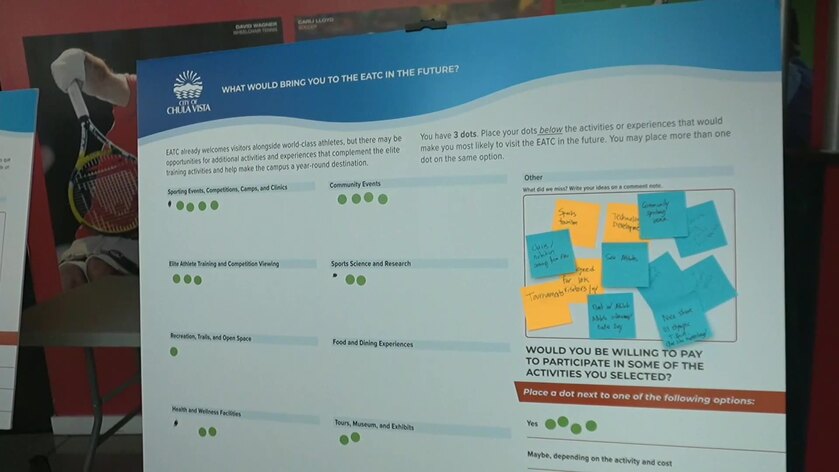
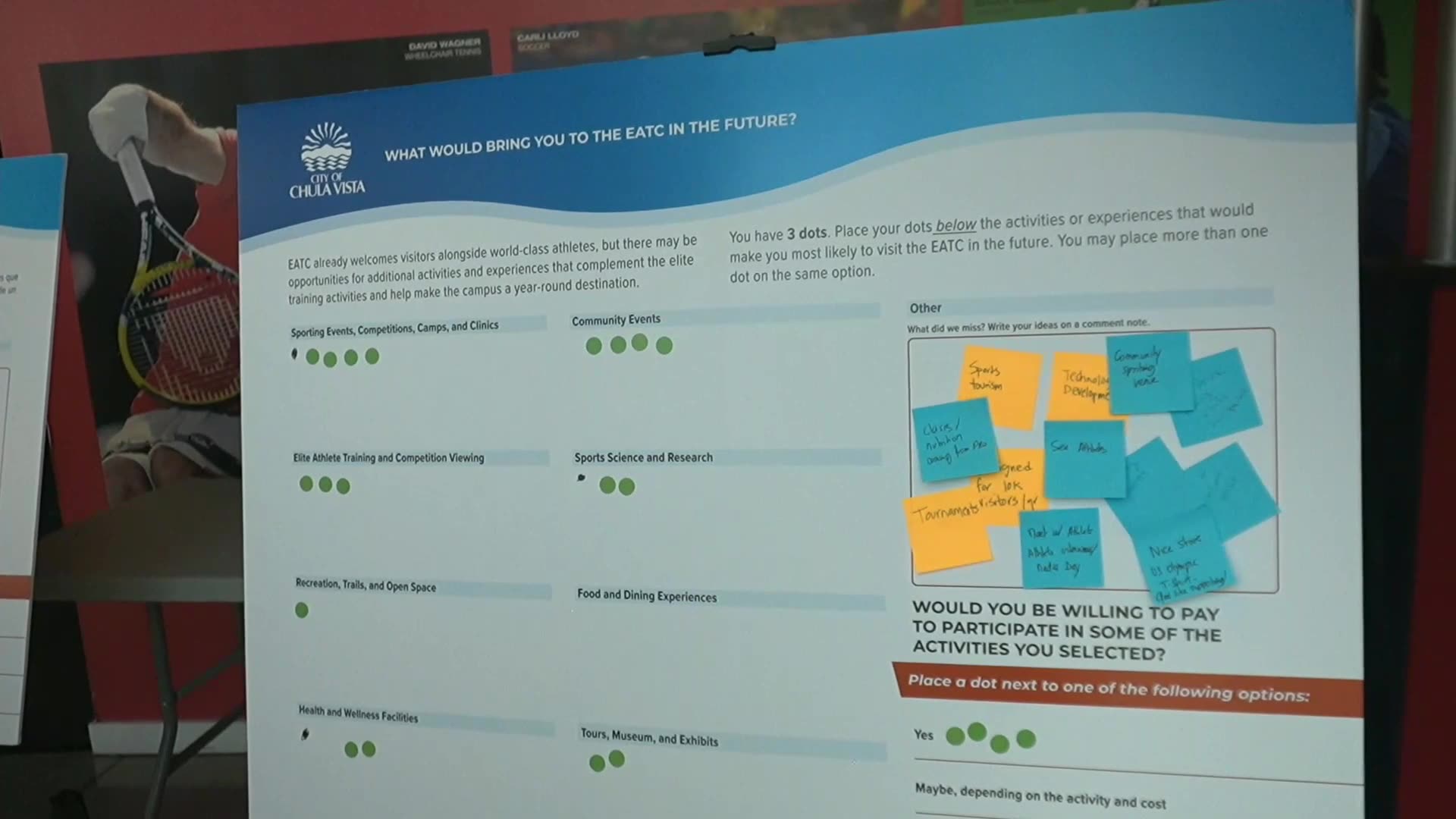
2026-10-21 - Elite Athlete Training Center Open House: Master Plan Kicks Off With Community Workshop

AI disclaimer: This article was written from the livestream transcript (AI-assisted summary). Quotes and figures have not been checked against the recording audio and are pending human verification.

Event: City of Chula Vista Athletic Training Center Open House (community workshop for the Elite Athlete Training Center master plan), Wednesday, Oct. 21, 2026, 4:00 to 7:00 p.m., Chula Vista Elite Athlete Training Center, 2800 Olympic Parkway, Chula Vista, CA 91915 (time and location from the CVLD stream listing). CVLD streamed live from about 4:41 p.m. for 31 minutes.

What the workshop is for

The open house was a community workshop in an early stage of a master plan for the Chula Vista Elite Athlete Training Center. Brian Melekian, who introduced himself as president and chief operating officer for the training center, said residents could give input in two ways: by attending the workshop, which had boards asking how people use the center, what it does well and what it is missing, or through the City's community voices online portal. He said the process will probably take about another year, that this was one of the first of these meetings, and that the consulting firm Dudek will put the input into a report that will go before the City Council.

An urban planner with Dudek who gave her first name as Elizabeth said the firm was contracted by the City. She said the center covers 155 acres and is used primarily for elite athlete training, including Olympians and Paralympians, with fields, gymnasiums, on-site athlete housing and dining, plus public access to trails and annual events such as the Fourth of July fireworks. She said the review covers the whole facility, physical, economic, partnerships, contracting and programming, and will produce a 20- to 30-year plan. She said the goal is to maintain elite athlete training while building on it, and raised the question of how to open up public access while keeping some privacy for athletes who live on site.

About 10 people had come through when the stream began, according to an exchange at the sign-in map. Strong winds later moved the boards indoors.

History and the operator contract

Melekian said the center opened in 1995 and served only the U.S. Olympic Committee until 2017, when the City of Chula Vista took over ownership and engaged Elite Athlete Services to operate it. He said the company renewed a 10-year operating contract in December 2025, and that both sides acknowledged the 30-year-old facility needs work. Rather than proceed project by project, he said, they chose a broader master plan to decide what to fix, add, change or remove, and the City helped start the process when it signed the extension. He said dates for future workshops would be made public by Dudek and the City.

Public access and events

Melekian said many people at the July 4 fireworks, which he called the center's biggest annual event drawing a couple thousand residents, tell him they did not know they were allowed to visit. He said the public can take a self-guided walk down the spine of the campus, book a guided tour, or book an enhanced tour with lunch in the dining hall. He gave the center's website (heard as "train it at Chula Vista dot com"); tour options are listed under Tours. He said former tennis courts have been converted to pickleball courts open to the public.

He said the center held a 5K the previous weekend and has another in November (he first said Nov. 13, then corrected it to Nov. 14). Last year it hosted a drone show that he said drew about 2,000 people over two nights. Looking ahead, he said the center hears requests for concerts and named smaller, boutique concerts and high school or club soccer championships as possibilities, while saying it would not replace the amphitheater or Snapdragon Stadium and is not built to be a weekly tournament venue. As one idea, he described an artificial turf field used by elite athletes during the day and by the community after school.

He said the challenge is to maintain the facility at the standard expected of what he called the biggest Olympic training center in the world, which he said produced 92 medals at the Paris Games, while giving the community the access it wants.

Schools and partnerships

Melekian said the center has a full-time classroom as an "innovation station" through the school district, with students on site every day and a couple hundred children touring on a given day. He said San Diego FC brings training it cannot accommodate at its Singing Hills facility to the center, and that in June the center announced a relationship with Bayern Munich, which set up the center's first residential student athletes who live, attend school and train on site.

He said his background is in professional soccer, and that the 155-acre campus has produced roughly 2,500 medals in its 31 years.

Public comments heard on the stream

Robert Johnson of Chula Vista Live Data, speaking as a resident, asked that public access to the trails and events be kept, suggested more community events such as Taste of Italy to draw visitors to the city's east side, suggested promoting legal drone flying and drone sports photography in suitable nearby areas, and suggested better internet access for livestreaming sports from the site. He encouraged residents to fill out the online survey. The Dudek planner said drones had not been part of the assessment so far and noted that athletes live on site.

A man who identified himself as Jeff Becker, publisher of a Chula Vista magazine, said he has published interviews with Melekian and athletes at the center and pointed viewers to his magazine's website.

LIVESTREAM :

placeholder

Website : https://www.chulavistalivedata.com

Fact-check notes (public sources)

Read full Article
October 22, 2026
post photo preview
2026-10-21 - Veterans Advisory Commission: Meeting Moves to Council Chambers, Commissioner Pine Resigns, Veteran of the Year Set for Nov. 10

AI disclaimer: This article is based on the CVLD livestream recording and transcript (AI-assisted summary). Votes and roll call have not been checked against official minutes and are pending human verification.

Meeting: City of Chula Vista Veterans Advisory Commission, Regular Meeting, Wednesday, Oct. 21, 2026, 6:00 p.m., City Hall, Bldg. C, Conference Room B-111, 276 Fourth Avenue, Chula Vista, CA

Agenda: https://pub-chulavista.escribemeetings.com/Meeting.aspx?Id=6b4e92a0-a766-4dfc-9c60-da741fbecb6d&;Agenda=Agenda&lang=English

Meeting page: https://pub-chulavista.escribemeetings.com/MeetingsCalendarView.aspx/Meeting?Id=6b4e92a0-a766-4dfc-9c60-da741fbecb6d

Call to order and roll call (Items 1–3)

The meeting was called to order at 6:05 p.m. The presiding officer asked the deputy city clerk to call the roll. Commissioners Castro, Jimenez, Jones and Pine and Vice Chair Akana were recorded as present. Chair Nava was absent. Commissioner Pine led the Pledge of Allegiance.

Consent Calendar (Items 4.1–4.2)

Item 4.1 was approval of the Sept. 16, 2026 minutes; Item 4.2 was consideration of excused absence requests. The deputy city clerk reported one written public comment in support of Item 4.2 (the commenter did not wish to speak) and announced that a late excused-absence request from Commissioner Castro had been added to the commissioners' paperwork and the public binder.

Commissioner Pine moved to approve the consent calendar, seconded by Commissioner Jimenez. The presiding officer announced that the item passed unanimously.

Public Comments (Item 5)

The deputy city clerk reported no public comments on non-agenda items.

Item 6.1 – Review and Discuss Commission Subcommittees

No staff presentation was given; staff said discussion would be led by members. City Attorney's Office staff explained that there are two types of subcommittees: ad hoc subcommittees, which are limited in purpose and time and can meet on their own without being a public meeting under the Brown Act, and standing subcommittees, which are ongoing and may need to be noticed and agendized. Staff said what matters is how a subcommittee is actually run, not what it is called.

On the Veteran of the Year subcommittee, a commissioner suggested forming a new ad hoc subcommittee each year, named for that year, that dissolves after the award (roughly July to November). Fire Captain Eric D. Martinez, the commission's staff liaison, noted that in past years the subcommittee had been active nine to eleven months of the year and asked the commission to weigh that history. City Attorney's Office staff said the described schedule sounded consistent with an ad hoc subcommittee, and said no motion was needed.

On the Outreach subcommittee, commissioners discussed that its work largely overlaps with the full commission's. A commissioner suggested dissolving it and instead forming project-specific subcommittees or taskings as projects come up; a commissioner recalled that Mr. Verdugo, the commission's previous representative from the City Attorney's Office, had previously cautioned the commission that the outreach scope was broad. No motion or vote on 6.1 was heard. The deputy city clerk reported no public comments on 6.1.

Item 6.2 – Resolution Moving Regular Meetings to City Hall Building A

Staff said the City is consolidating board and commission meetings, and the resolution would move the commission's regular meetings to the Council Chambers in City Hall Building A, which staff described as roomier and better for presentations. The deputy city clerk said the resolution requires a motion. The clerk also announced that because the Planning Commission already has the Council Chambers booked on the commission's next meeting date, the next meeting will stay in the current room and be billed as a special meeting; the first meeting in the Chambers is expected in December.

A commissioner moved to adopt the resolution moving the meeting location to City Hall Building A Council Chambers; another commissioner seconded. The mover and seconder were not named aloud. The presiding officer announced the item passed unanimously.

After the vote, the presiding officer asked for public comment on 6.2. One member of the public, identified by the clerk as Robert, said he supported the move and the improved access and audio recording, but asked that meeting-time conflicts be discussed along with the location change, noting that this meeting conflicts with other commission meetings he attends, such as the Board of Ethics and the Board of Library Trustees (both canceled that night). He asked that public comment be called before votes. City Attorney's Office staff advised that, since the vote had been taken, the timing question could be raised in chair or staff comments and agendized for a future meeting, either by the chair or by a majority of the commission.

Item 7 – Items Removed from Consent

None.

Item 8.1 – City Attorney's Office Update on Starlight Parade Participation

City Attorney's Office staff said participation requires an application, due Oct. 28, and provided printouts of the form. Staff said the simplest approach would be for the commission to apply for itself; other groups are free to apply on their own, and any group the commission invites should be clearly named in the application to avoid potential conflicts or implied endorsement. Asked about liability if commissioners' families join, staff said liability is fact-specific and cannot be predicted, but immediate family walking with commissioners is typical and can be disclosed in the application; the City would flag any concerns. No public comments.

Item 9 – Chair's Comments

The presiding officer asked about the new agenda format. The deputy city clerk said subcommittee updates were listed individually at Chair Nava's request, and individual commissioner comments can be given after Item 10.3.

The staff liaison added that the commission was working well with the Human Relations Commission (per the transcript) on the Veteran of the Year celebration, and asked the subcommittee to send staff the honoree's name and retired rank/title as it should appear on the City Council agenda item, plus any wording for the mayor beyond the proclamation text, which the presiding officer said had already been submitted.

Item 10.1 – Veteran of the Year Subcommittee

The presiding officer reported working with City staff member "Angelo Debara" (spelling unverified) on a flyer. Plans described: a reception about one hour before at City Hall, with friends and family invited; the Philippine American Military Officers Society was expected to help with food; guest arrival around 3:45 p.m. Commissioners confirmed the recognition at the Nov. 10 City Council meeting. A commissioner said the Naval Medical Center San Diego color guard, which is volunteer, needs four members and has three, with a fourth expected. The program: presentation of colors, a national anthem sung a cappella, then the mayor's proclamation. Staff said it would ask that the item be placed first on the agenda. Commissioners asked that letters to other nominees come from the mayor's office; a commissioner said the mayor's office mailed such letters last year. The staff liaison said the liaison will not attend because of a class. No public comments.

Item 10.2 – Outreach Subcommittee

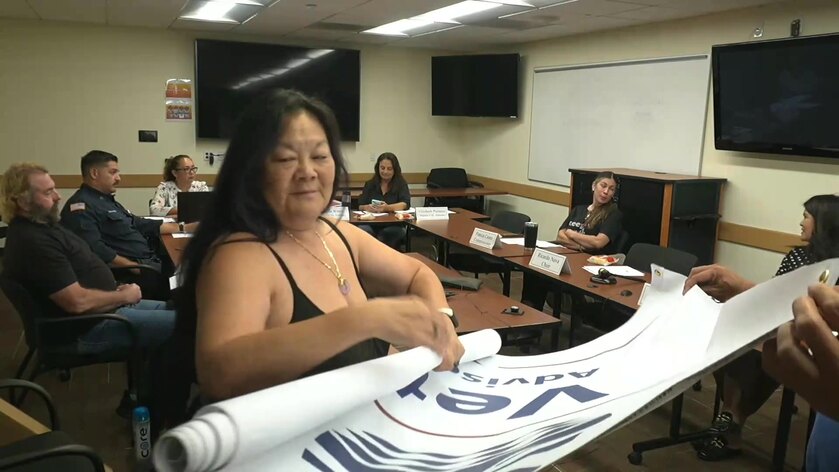
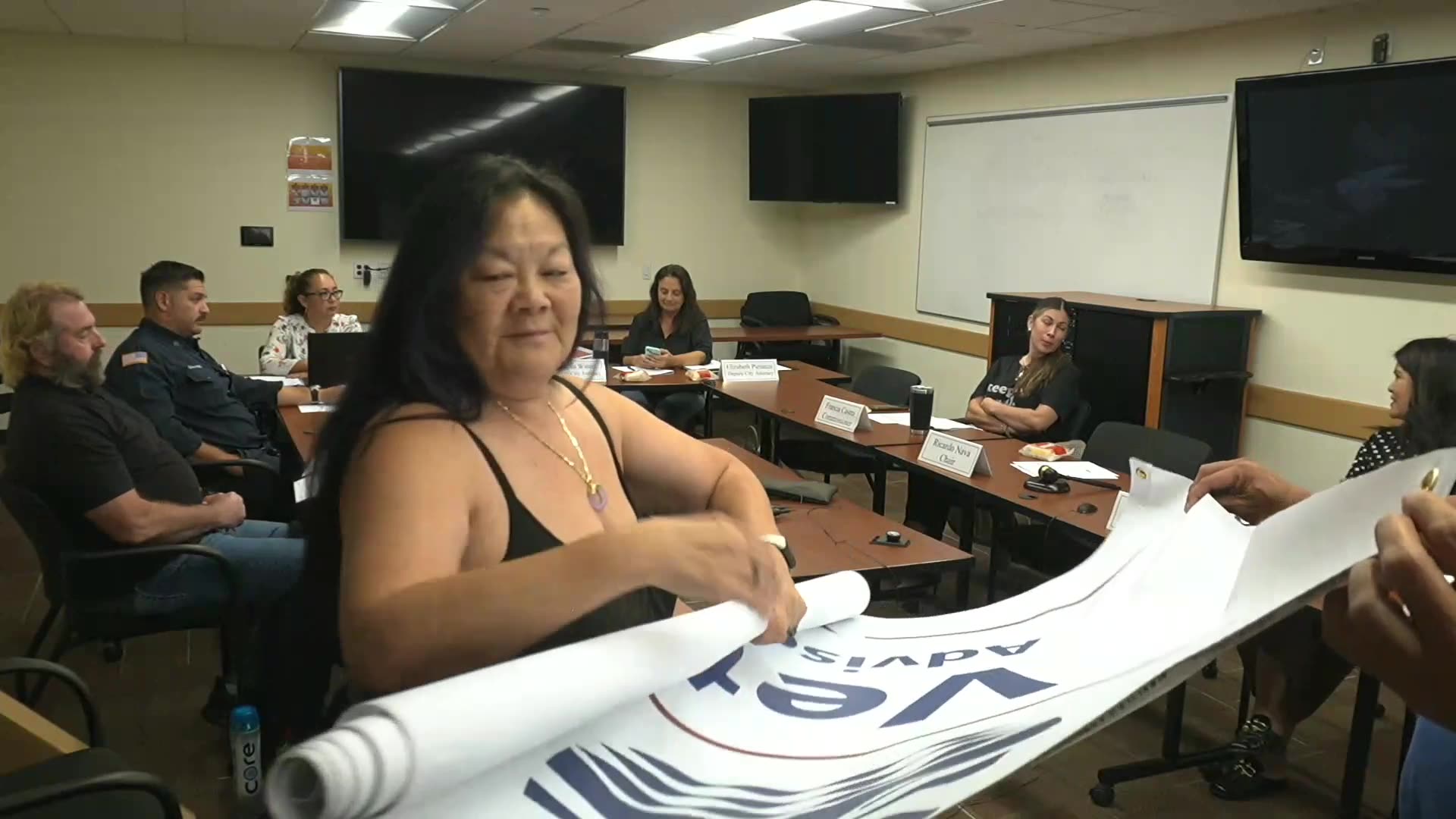
Commissioner Pine presented the commission's new banner, which uses the City Communications Department's design after several rounds of revisions, and donated it. The staff liaison accepted it on behalf of the commission, to be held by the Communications Department, and said staff would confirm the check-out process so it is available for the Nov. 10 event. Commissioners said the donation and logo are approved in writing. No public comments.

Item 10.3 – Starlight Parade Subcommittee

City Attorney's Office staff asked whether anyone was on the subcommittee or wanted to volunteer, and noted the Oct. 28 deadline. A commissioner said ideas had been discussed earlier (walking, a vehicle, Chair Nava participating with a child) but nothing was decided. Several commissioners said they were unavailable or unsure for the parade date, given in the meeting as Saturday, Dec. 5. A commissioner said the matter should probably be discussed next year with more lead time, noting past honorees are elderly and may not be able to walk the route, and suggested a decorated vehicle in the future. Asked whether a motion was needed, staff said none was needed since the commission was not taking action; the commission took no action on applying this year. The deputy city clerk reported no public comments on 10.3.

Commissioner comments

Commissioner Pine read a letter to the mayor announcing a resignation from the commission effective after this meeting. Pine said the seat is a mayoral appointment, said a Chula Vista veteran who has applied to the commission had been recommended, and said Pine plans to attend the Nov. 10 event.

A City Attorney's Office staff member (Elizabeth, per the transcript) introduced a new attorney in the Office of the City Attorney who will staff the commission. He said he served 24 years as a civilian attorney with the Navy, was an active-duty Air Force JAG, and later a reserve JAG.

Adjournment

The meeting was adjourned at 7:01 p.m. to the next regular meeting on Nov. 18, 2026, at 6 p.m.

LIVESTREAM : Part 1

placeholder
| Part 2
placeholder

Website : https://www.chulavistalivedata.com

Fact-check notes (public sources)

  • Agenda (HTML): https://pub-chulavista.escribemeetings.com/Meeting.aspx?Id=6b4e92a0-a766-4dfc-9c60-da741fbecb6d&;Agenda=Agenda&lang=English
  • Agenda (PDF): https://pub-chulavista.escribemeetings.com/FileStream.ashx?DocumentId=67047
  • Meeting page: https://pub-chulavista.escribemeetings.com/MeetingsCalendarView.aspx/Meeting?Id=6b4e92a0-a766-4dfc-9c60-da741fbecb6d
  • City video / captions: none posted on eScribe for this meeting as of Oct. 22, 2026 (meeting listed with no video).
  • CVLD livestream: Part 1
    placeholder
    ; Part 2
    placeholder
  • Sources: the CVLD livestream recording and transcript, checked against the agenda. No official City captions were available. Roll call and vote tallies derived from the meeting audio transcript (AI-assisted); pending human verification.
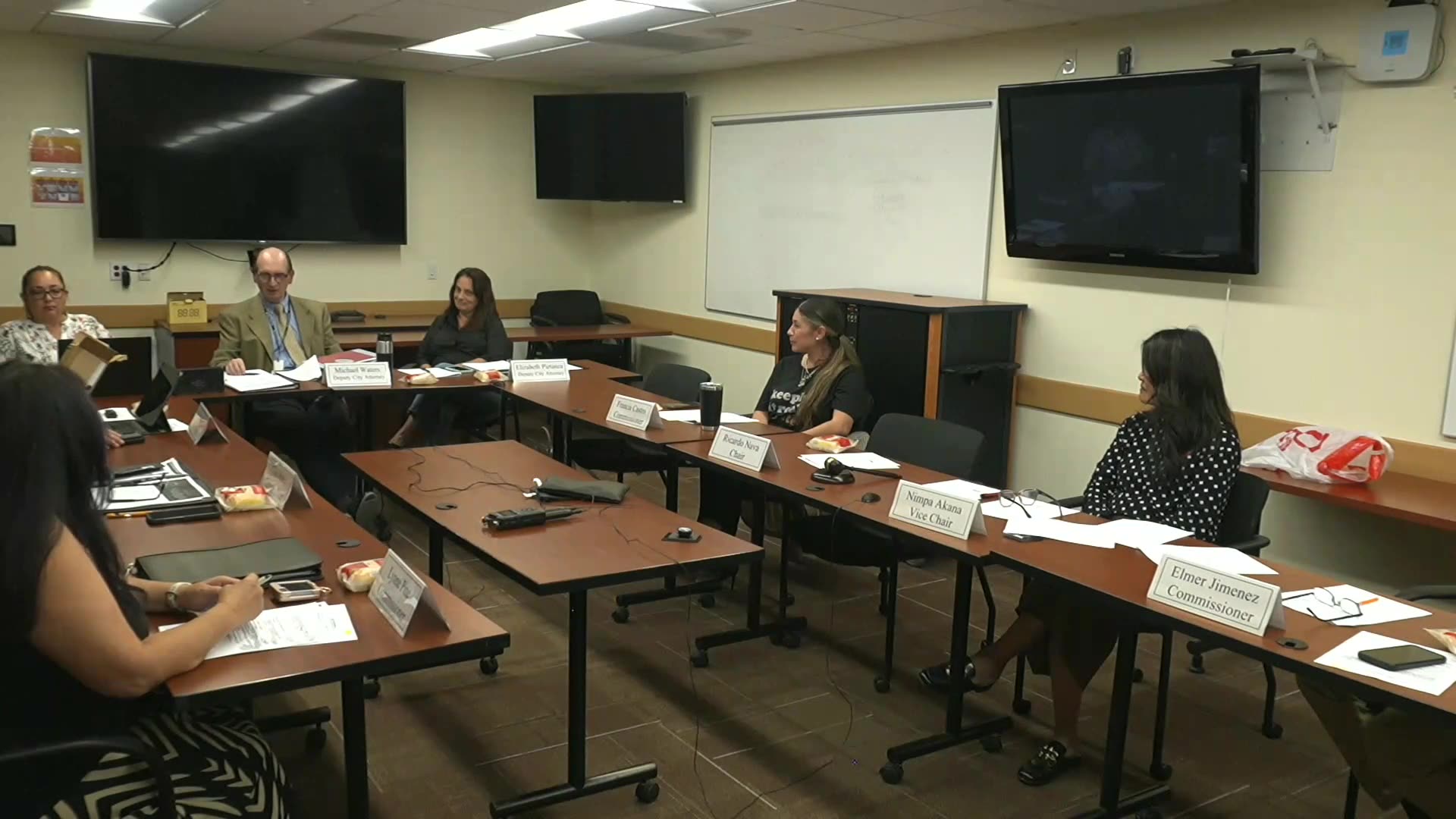
  • Names are written as given in the agenda where possible. Uncertain spellings: deputy city clerk (heard as "Carballo," "Caballo," "Carvilla"); City staff member "Angelo Debara"/"Abarra"/"Angel"; new commissioner "Chad" (first name only). Not identified: presiding officer (presumed Vice Chair Akana since Chair Nava was absent; not stated).
  • Left out / unresolved: most speakers are not identified by name in the recordings; the 6.2 mover and seconder were not named aloud. Commissioner Castro was recorded present at roll call, yet an excused absence request from Castro was added under 4.2; the agenda does not say which absence it covers. Next meeting: the deputy city clerk said the next meeting will be a special meeting in the current room because of a Planning Commission booking, while the adjournment named the next regular meeting as Nov. 18, 2026 at 6 p.m.; the agenda lists Nov. 18. About one minute between the two livestream parts (end of Item 10.3 and the start of commissioner comments) was not captured. The parade date of Dec. 5 is as stated in the meeting.
  • Procedure: on Item 6.2 the vote was taken before public comment was called; the presiding officer then took public comment after the vote (pending human verification).
  • Official minutes not yet available; they will be checked after the next meeting approves them.
  • Commission roster and regular schedule (third Wednesday, 6 p.m.): https://www.chulavistaca.gov/departments/city-clerk/boards-commissions/boards-commissions-list/veterans-advisory-commission
  • Starlight Parade (Saturday, Dec. 5, 2026): https://www.starlightparade.com/participate/
Read full Article
October 15, 2026
10-15 — MTS board votes 11-3 to replace fare-evasion diversion with an administrative penalty program; workers press for equal health care rates

This article was generated from audio of the public meeting and reviewed. Names and figures are reported as stated at the meeting.

SAN DIEGO — The San Diego Metropolitan Transit System Board of Directors met on Oct. 15, 2026, at the James R. Mills Building. The board voted 11-3, with one member absent, to adopt proposed Ordinance No. 15, which would move most fare-evasion and minor conduct citations out of criminal court and into an MTS-run administrative penalty program. Staff put the estimated effective date at Jan. 1, 2029. The board also amended the FY2027 operating budget to add about $3.7 million in projected fare revenue, and heard frontline workers ask for health insurance rates equal to management's.

Health care costs. In general public comment, MTS employees said their health insurance costs rose in 2026 and are set to rise again in 2027. Andrew Roman, who said he has worked at MTS for five years and is a SMART union member, said that starting Jan. 1, 2027, he will pay "$3,200 more per year than management pays for the exact same coverage." He asked the board to direct MTS leadership to work with the union to equalize rates before the January increase. An earlier speaker said MTS had offered to contribute 5% more toward employee premiums in exchange for changes to PTO policies. LRV electromechanic and Navy veteran Brandon Burgos and a 13-year trolley employee made similar requests.

Consent calendar. The board approved consent items 3 through 11, moved by Director Hall and seconded by Director Downey, with 10 members voting yes and five absent. One speaker, a train operator, objected to a CEO report item listing an employee taco truck event as a notable achievement, saying it is scheduled when management takes lunch.

FY2027 budget amendment. Staff (Mike Thompson, with a financial planning manager) said the fare changes that took effect Oct. 1 are now projected to add about $3.7 million in fare revenue this fiscal year. That figure starts from a SANDAG fare-model estimate of about $9 million, less about $5.3 million for the PRONTO LIFE fare-freeze program for eligible low-income riders. Staff now project 1.4% ridership growth, down from 2.3%, and about $87 million in passenger fare revenue. The five-year forecast still shows FY2027–FY2029 balanced, with about a $50 million gap in FY2030, down from about $80 million in June. The board approved Resolution 26-18, moved by a board member and seconded by Vice Chair Goble, 11-0 with four absent.

Administrative penalty program. MTS counsel Karen Landers presented the Public Security Committee's recommendation to use Public Utilities Code Section 99580 instead of criminal citations under Penal Code 640. Under the proposal, a first citation would carry a $75 fine with 21 days to pay or request initial review; it would rise to $100 after the first deadline and go to collections after 90 days, at a $125 maximum. Ten of the 13 violations allowed by state law would be covered. Spitting, carrying hazardous materials, and urinating or defecating on MTS property would stay criminal, as would a third or later violation of the same type. The program would replace MTS's current diversion program ($25 fine or three hours of community service within 120 days), which Landers said about 15% to 20% of cited riders use; the rest go to court. Staff estimated about $375,000 in one-time costs, $600,000 to $725,000 a year to run, and a net annual cost of about $340,000 to $465,000 after fine revenue. MTS would keep 100% of the penalty revenue.

A speaker from PATH spoke in support: "giving someone a criminal record over a missed $3 trolley ticket doesn't make sense." Public Security Committee chair and Chair Pro Tem Monica Montgomery Steppe moved the recommendations, saying, "We start administratively and we don't start criminally." Directors Downey, Foster, Elo-Rivera and Smith and another board member spoke in support. Vice Chair Goble said the plan was "tougher than the existing program" and costs more, and said he could not support it. Director Hall called the cost figures "speculation" and said, "We just can't afford it." A board member asked staff to report how much staff time officers now spend at court hearings.

The board first voted 14-0, with one absent, to waive reading the ordinance in full (moved by Hall, seconded by Montgomery Steppe). It then adopted the remaining recommendations, including Ordinance No. 15. The motion passed 11-3, with one absent; Vice Chair Goble and Director Hall spoke against it. Staff said a program manager position could come back as early as the Nov. 19 meeting.

Other business. The PRONTO LIFE update (item 14) was sent to the board by email instead of being presented. In the FY2026 performance report presented by Brent Boyd, staff said ridership rose about 0.1% for the year and about 2% in the fourth quarter, with preliminary first-quarter FY2027 data up about 5%. Passengers per revenue hour rose about 8% in Q4. MTS moved from 21st to 13th nationally in ridership, staff said. Chair Whitburn congratulated staff on MTS receiving the American Public Transportation Association's Outstanding Public Transportation System Award. After closed session, counsel reported that the board gave instructions in Edmundson v. San Diego Metropolitan Transit System and took no reportable action on the CEO's performance evaluation and labor negotiations. The meeting adjourned at 12:22 PM. The next meeting is Nov. 19 at 9 AM.


This article was generated from audio of the public meeting and reviewed. Names and figures are reported as stated at the meeting.

Watch the livestream on Rumble:

placeholder

Listen to the podcast on Substack: https://172287.substack.com/p/mts-board-of-directors-oct-15-2026

Sources

Read full Article
See More
Available on mobile and TV devices
google store google store app store app store
google store google store app tv store app tv store amazon store amazon store roku store roku store
Powered by Locals